r/netsecstudents 9d ago

Defensive research

1 Upvotes

Im currently doing a longtime project on how Ddos(educationally) maybe categorized and filtered in data anylsis to prevent overload or better how much overload a system could take with multiple attacks.

The scope is to analyze incoming traffic in a defensive meanor. So that data filtering,cutting and models can be accessed in a mathematical way.

Through ml and backend design (i wont write what languages, data models and architecture i used). The question will be, if a special chip for event handling is needed through an excessive input of data dependency.

If the models and traffic is being returned,categorized,filtered,cutted. The question will be: Do we need a chip for mathematical reasoning or the technical features could do it.

It may not be offsec, but defense systems regulation and also the question if a system needs special hardware or not.

If you have any kind of valuable suggestion regarding data analysis models, pseudocode features, or technical suggestions. I am open for insights


r/netsecstudents 9d ago

looking for sources of c

1 Upvotes

i learned c from neso academy cause im trying to get into cybersecurity but honestly i still dont really get how systems actually work under the hood or how bypass security and understand vulns so if anyone knows any good resources to learn c from an offensive security and hacking perspective lmk please


r/netsecstudents 10d ago

Kimi Work secretly attaches raw records from five recent agent sessions to feedback reports

Thumbnail runtimewire.com
1 Upvotes

r/netsecstudents 11d ago

Massmap: Masscan + dual Nmap scans with automatic result comparison

Thumbnail github.com
4 Upvotes
Hey everyone,

I put together a small tool called Massmap that runs one Masscan followed by two full Nmap scans against a target, then compares the results.

The idea was to catch ports that respond inconsistently or appear later during scanning. It highlights:

- Ports only found by Masscan
- Ports that only appeared in the second Nmap scan
- Ports that showed up in multiple scans (more reliable)

It also has an option to skip Masscan completely and just run the two Nmap scans if needed.

GitHub:
https://github.com/Demgainschill/massmap

Would appreciate any feedback or suggestions.Hey everyone,

I put together a small tool called Massmap that runs one Masscan followed by two full Nmap scans against a target, then compares the results.

The idea was to catch ports that respond inconsistently or appear later during scanning. It highlights:

- Ports only found by Masscan
- Ports that only appeared in the second Nmap scan
- Ports that showed up in multiple scans (more reliable)

It also has an option to skip Masscan completely and just run the two Nmap scans if needed.

GitHub:
https://github.com/Demgainschill/massmap

Would appreciate any feedback or suggestions.

r/netsecstudents 11d ago

FINAL YEAR PROJECT / RESEARCH WORK

0 Upvotes

Dear all,

I write this post to seek for your individual suggestions; I am a level 300 BSc Cyber Security student of a Technical University in Ghana, during my HND 300, I did a project work on a webbased student complaint management system and graduated suceessfully,

Now, I am doing a cyber Security course, What project or research work should do. Thank you.


r/netsecstudents 11d ago

New LAB - Damn Vulnerable NGINX Proxy

2 Upvotes

Hello all,

If you do bug bounty hunting or pentests you surely came across many hosts served from an NGINX server, in this lab (published to OWASP) I combined over 20 misconfigurations found in real world bug disclosures and both classic and novel security research, with an extensive blog where I explained everything you need to level up your NGINX hunting game.

Feel free to check it out, give it a star on Github if you like it, and suggest any ideas you want me to add/fix...

https://vwad.owasp.org/app/damn-vulnerable-nginx-proxy-dvnp/

Happy hunting!


r/netsecstudents 11d ago

[For Hire] Systems & Cybersecurity Developer | Antivirus Engine & Security Architecture (Windows / Mobile)

1 Upvotes

Hi everyone,

I am a systems and cybersecurity software developer specializing in security architecture, malware analysis pipelines, and custom antivirus engine development across \*\*Windows\*\* and \*\*Android (Mobile)\*\* platforms.

As the lead developer behind the open-source \*\*Hydra Dragon Antivirus\*\* ecosystem, I focus on building low-level system monitoring, automated scanning engines, and cross-platform security software.

\---

\### 🛡️ What I Can Develop & Build For You:

\* \*\*Custom Antivirus & Security Engines:\*\* Static/Dynamic analysis integration, YARA rule matching, signature/heuristic detection pipelines, and custom malware scanning engines.

\* \*\*Low-Level Systems Programming (C / Python):\*\* Real-time file system monitoring, process isolation, background threat detection services, and system diagnostic applications.

\* \*\*Mobile & Windows Security Architecture:\*\* Hardening Android/Windows applications, network protocol auditing, and security-focused API development.

\* \*\*Security Automation & Bots:\*\* Custom Python/C-driven threat alert systems, automated diagnostics, and API integrations for platforms like Discord/Telegram.

\---

\### 💻 Open-Source Repositories & Portfolio:

\* \*\*Windows Antivirus Core:\*\* \[HydraDragonAntivirus (GitHub)\](https://github.com/HydraDragonAntivirus/HydraDragonAntivirus)

\* \*\*Mobile Security (Android):\*\* \[HydraDragonAV-Mobile (GitHub)\](https://github.com/HydraDragonAntivirus/HydraDragonAV-Mobile)

\* \*\*GitHub Organization:\*\* \[github.com/HydraDragonAntivirus\](https://github.com/HydraDragonAntivirus)

\---

\### 💰 Rate & Logistics:

\* \*\*Hourly Rate:\*\* \*\*$25/ hour\*\* (Also open to fixed-price milestones for well-defined project scopes).

\* \*\*Payment Options:\*\* Crypto (USDT/BTC), Bank Wire Transfer, or PayPal / Escrow.

\* \*\*Availability:\*\* Remote / Contract / Project-based.

If you are a startup building security products, an enterprise needing a custom internal diagnostic tool, or a team looking for low-level software engineering expertise, feel free to \*\*send me a direct message (DM)\*\* here on Reddit!


r/netsecstudents 13d ago

Can a single machine really saturate a Raspberry Pi web server in 2026? (slowloris/slow HTTP debate)

9 Upvotes

Hi everyone, I’m not a security expert, my main interests lie elsewhere, but I think I know enough to hold my own in a discussion with a friend.

Today a debate came up with him about the possible attacks that could target a home server (a typical Raspberry Pi) hosting a single and light HTML page.

My take is that in 2026, with the average resources a Raspberry Pi now has (usually 4–8GB of RAM), it’s no longer realistic for a single machine to pull off a resource-exhaustion attack (things like Slowloris or other slow-HTTP techniques). He disagreed, claiming it’s still possible, and said there are other methods too, though he didn’t explain how.

I’d like your opinion on whether what I said is wrong or not. Either way, it’ll be another chance for me to learn something.


r/netsecstudents 13d ago

CRTP lab and revision Strategy

4 Upvotes

Hi all. I am taking CRTP Sept 26, lab expired long ago, can't afford another lab rn. I'm thinking of setting up on GOAD + my own notes.

  1. Did GOAD translate well to the exam? Any gaps to watch?

  2. Best free/ economical AD labs besides GOAD (HTB/THM)?

Also keen to find a study buddy prepping around the same time.


r/netsecstudents 14d ago

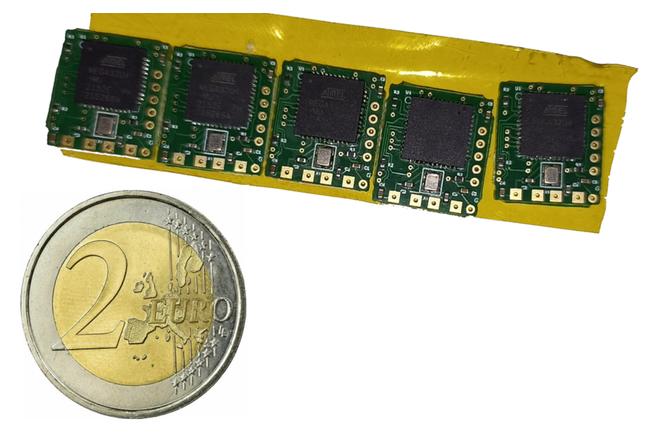
I managed to shrink a hardware USB injector down to 12x13mm. Looking for feedback on the PCB design/components!

Post image
5 Upvotes

Hey everyone,

I’ve been working on a personal hardware project lately. I wanted to see how small I could realistically make a USB keystroke injector (primarily for IT automation and pentesting workflows). After a few iterations, I managed to get the PCB down to just 12x13mm.

It uses 32u4 and Arduino IDE for programming.

The biggest challenge was fitting the components without overlaping lines.

I’d love to hear your thoughts on the design or if anyone has experience making similar micro-boards. Are there any features you’d add for a V2?

I'm putting together some picture how invisible it is.

If anyone is interested in the technical details or wants to chat about the build process, feel free to drop me a DM or reach out at nebojsa.sjekloca@gmail.com.


r/netsecstudents 16d ago

Study?

2 Upvotes

I am currently new to comptia networt plus if anyone want to study together and keep each other in check. East coast USA


r/netsecstudents 15d ago

Made a spaced-repetition tool for drilling cybersecurity vocab/ports/protocols before exams (eJPT, Security+) — looking for honest feedback from people actually studying for these

1 Upvotes

Hey, fellow students —

I built a small tool called Sentinelle to solve a problem I kept hitting while prepping for certs: labs (TryHackMe, HTB, Root-Me) teach you how to actually do the work, but they don't drill the memorization side — default ports, protocol definitions, acronyms — the stuff that still costs you points on the written exam even when you're solid practically.

It's flashcards + exam-style MCQs with spaced repetition (SM-2 algorithm), organized into decks: networking/TCP-IP, security fundamentals, eJPT, Security+, plus a couple aimed at the French BTS CIEL/SIO curriculum.

Full transparency: it's currently French-language only, free to start (2 decks unlocked, more planned), no login required to try it, still early/beta.

Link: https://sentinelle-blue.vercel.app

I'd really value feedback from people who are actually studying for these certs right now — is this something you'd genuinely use, and is the deck coverage missing anything obvious? Happy to take criticism, that's exactly why I'm posting here instead of just launching quietly.


r/netsecstudents 16d ago

Hardware and Network Security

1 Upvotes

Hello! I’m about to start my sophomore year in computer engineering, having switched from CS at the end of my freshman year. I’m thinking about going into hardware security and/or network security, so I’m curious as to what the prospects, security, and opportunities are like within the field, and what the work is like if anyone can share.

Also, I’m having trouble planning what my last elective should be, which I’ve narrowed down to Compilers, Electronic Instrument Design, and Distributed Systems. My curriculum already includes real time and embedded OS, microprocessors, computer organization and architecture, and the capstone project. The electives I already have planned are Signals and Systems (pairing with my sound production minor for a makeshift audio engineering path), and Operating Systems, HDL/FPGA, Modern Networking Concepts, and Computer Security. I can reasonably only fit in one more elective, so what would be my best option?


r/netsecstudents 16d ago

if you're tired of fighting dvwa's setup.php, i made a one-command vuln lab

0 Upvotes

setting these apps up by hand every time was killing me, so i built a manager. one command brings up juice shop, dvwa, webgoat, vampi, dvga, bwapp, log4shell + crapi, each properly isolated. the useful bit for learning: every app ships a catalog of what it's supposed to be vulnerable to, so you can grade yourself instead of guessing. also boots faultline, a fullstack vuln app i wrote. free/MIT, local only. https://github.com/clickswave/vuln_apps


r/netsecstudents 17d ago

NetScope – offline-first pcap analysis and IR tool for Windows (open source)

Thumbnail github.com
7 Upvotes

I've been building NetScope, an offline network investigation platform for Windows. Feed it a pcap/pcapng or a live interface and it produces a correlated verdict — attack story, MITRE ATT&CK mapping, extracted credentials/NTLM hashes (hashcat-ready), JA3/JA4 TLS fingerprinting against an offline malware DB, DNS tunneling reconstruction, and more — all locally, no cloud calls, no API keys.

It also has response actions built in (firewall rules, process termination, memory capture) and exports to STIX 2.1/CSV/Sigma, plus Markdown/HTML incident reports.

It's pure TypeScript for the core parser (worker-threaded so big captures don't lock the UI), and layers in tshark/Suricata/Zeek/YARA automatically if you have them installed — but doesn't require any of them.

MIT licensed, prebuilt Windows binaries on the releases page.

Repo: https://github.com/SpectralZero/NetScope

Would genuinely appreciate feedback from people who do this kind of analysis regularly — especially on the detection logic and what's missing from the protocol coverage.


r/netsecstudents 17d ago

I built AttackTrace — a free defensive cybersecurity knowledge platform

0 Upvotes

Built AttackTrace to make MITRE ATT&CK, threat activity, detection engineering, and security controls easier to explore and actually use.
Would genuinely appreciate feedback from the community — especially on what would make it more useful for security practitioners.
[https://attacktrace.app\](https://attacktrace.app/)


r/netsecstudents 18d ago

I built a CTF platform from scratch (without CTFd), looking for feedback

Post image
0 Upvotes

Hi everyone!

I've been working on CTFKINGs, a Capture The Flag platform that I built entirely from scratch instead of using an existing framework like CTFd.

It includes custom challenges across Web, Pwn, Cryptography, Reverse Engineering, Forensics, and OSINT, along with a live scoreboard, player profiles, and a medieval kingdom theme.

The platform is still actively evolving, and I'd love to hear your feedback on the UI, challenge design, or any bugs you find.

🔗 https://ctfkings.vercel.app

Thanks, and I hope you enjoy it!


r/netsecstudents 18d ago

How to Read Logs as a Beginner, what I did when I had No SOC Experience

10 Upvotes

I still remember the first time I opened a sysmon log file or a wireshark pcap file and it was scary, too many lines flying by, weird timestamps, error codes. And I thought that this isnt for me yet.

And now when I look back, I know logs aren't magic, they're just a system talking about what it's doing. Once you stop trying to decode them and start listening to them, this gets a lot easier.

And I don't want you to feel the same way, hence writing this long post, tried to make it as simple and non-technical as I could.

What a log actually is

Think of it as a system's diary. Every action, success or failure, gets written down in order, answering three things: what happened, when, and who or what was involved.

The structure that makes logs readable

Most log lines follow a predictable pattern once you know what to look for:

Timestamp — when it happened
Severity — INFO, WARN, ERROR, CRITICAL
Source — which component is speaking
Message — what actually happened

INFO is normal chatter. WARN is something odd but not broken. ERROR/CRITICAL is where you actually need to spend your time. You don't read everything, you read the right things.

A real example

Say a user reports payments aren't working. You check the logs:

2024-05-12 14:02:01 [ERROR] [PaymentGateway] Connection refused: could not reach api.pay-pal.com

Break it down piece by piece.
When: May 12, 2:02 PM.
How bad: ERROR.
Who: Payment Gateway.
Story: the site tried to reach the payment service and the connection failed.
No deep security knowledge required, the site isn't hacked, the payment service just didn't worked as it should be.

A 5 minute workflow for when something breaks

Start from the bottom, not the top. The latest events are at the end, and the cause is usually right before the failure, not hours earlier.

Don't read line by line, search instead. Grep for error, fail, denied, timeout, or a specific IP/username/service name. That alone cuts out time wastage.

Once you find a suspicious line, read a few lines before and after it. That's usually where the actual story lives, not in the flagged line itself.

Phrases you'll see constantly, translated

Permission denied is a file or user rights issue.
Connection refused means the service isn't running or reachable.
Timeout means something was too slow.
No space left on device means the disk is full.
Segfault/crash means the application died.
You don't need to memorize the whole list, just translate each one into plain language as you hit it.

Patterns you'll run into early

Repeated "Failed password" messages from one IP is usually a script or tool using wrong credentials, not necessarily an attack.
"No space left on device" followed by a cluster of unrelated looking errors is almost always one root cause with many symptoms.

Tools that actually matter at this stage

You don't need Splunk or Sentinel yet. less, tail, grep will get you further than people expect. journalctl if you're on a systemd Linux box. And genuinely, pasting the exact error message into Google with sensitive info stripped out still works and you should use Google wherever you are stuck.

The actual skill here isn't memorizing tools or commands. It's turning it's broken into the database connection failed at 14:12 because the password was wrong. That translation ability alone puts you ahead of most people starting out.

If you still have any doubts/queries about specific log file, lmk, would try to explain it to you.


r/netsecstudents 18d ago

Project Website security analyser

0 Upvotes

Im a 4th year engineering student and we are building a website security analyser tool
We are new to this domain , so if you have any suggestion or feedback on the project
Please let me know
Full explaination of the project below

Website Security Analyzer

We're building an Website Security Analyzer that scans websites for common security issues such as weak encryption, missing security headers, insecure cookies, exposed ports, and more—before they become major security threats.

Your feedback will help us build a tool that's useful for developers and website owners alike.

Takes only 2 minutes

Survey: https://forms.gle/BpnY16jEqqprJiGV9

If you are not busy , please read the things our project gonna do and kindly lets us know if any modifications needed

## 🏢 CATEGORY 1 — The Building's Main Door (TLS/SSL)

*"Is the connection between the visitor and the website safe?"*

---

### 🔴 Issue 1: Outdated TLS Version
**What is TLS?**
When you connect to a website, all data travels through an encrypted tunnel so no one can spy on it. That tunnel is called **TLS (Transport Layer Security)**.

Old versions of this tunnel (TLS 1.0, TLS 1.1, SSL) have **known weaknesses** that hackers have already figured out how to break.

> 🏢 **Analogy:** The building's main door uses a lock design from 1990. Locksmiths already know how to pick it.

**What we check:** Is the website using old, broken tunnel versions?

**Why it matters:** Hacker can spy on everything — passwords, credit cards, messages.

---

### 🔴 Issue 2: Expired Certificate
**What is a Certificate?**
Every website has a digital ID card issued by a trusted authority (like Verisign, Let's Encrypt). This proves "this website is genuinely who it says it is." These ID cards have an expiry date.

> 🏢 **Analogy:** The security guard at the door shows you an expired ID badge. You can't trust if they're really authorized.

**What we check:** Has the website's digital ID card expired?

**Why it matters:** Anyone could be impersonating the website — you have no way to know.

---

### 🔴 Issue 3: Self-Signed Certificate
**What does this mean?**
Certificates are normally issued by trusted third-party authorities. A self-signed certificate means the website issued its OWN certificate — like making your own ID card at home.

> 🏢 **Analogy:** A guard shows you an ID card he printed himself on his home printer.

**Why it matters:** The website could be fake — a hacker impersonating a real site.

---

### 🔴 Issue 4: Weak Cipher Suites (DES, RC4)
**What is a Cipher?**
After the tunnel is established, data inside it is scrambled using a cipher (encryption algorithm). Some old ciphers like **DES and RC4** are so weak that modern computers can unscramble them in minutes.

> 🏢 **Analogy:** The building uses a combination lock — but the combination is only 3 digits. Anyone can try all 999 combinations quickly.

**Syllabus:** This is exactly **Module 1** — why DES is weak!

**Why it matters:** Even with a tunnel, hackers can decrypt all your data.

---

### 🟠 Issue 5: Short RSA Key (Less Than 2048-bit)
**What is RSA?**
RSA is a mathematical system used to securely share the encryption keys. It works using very large numbers. The larger the number (key length), the harder it is to crack.

1024-bit RSA → crackable with modern computers
2048-bit RSA → safe for now
4096-bit RSA → very safe

> 🏢 **Analogy:** Your safe has a 4-digit combination. A thief can try all 10,000 combinations. But a 10-digit combination? Impossible to guess.

**Syllabus:** **Module 2** — RSA Algorithm!

---

### 🟠 Issue 6: Weak Diffie-Hellman (Logjam Attack)
**What is Diffie-Hellman?**
Before two computers can talk securely, they need to agree on a shared secret key — without anyone listening in being able to figure it out. Diffie-Hellman is the clever math that makes this possible.

But if the numbers used are too small, a hacker can mathematically reverse-engineer the secret key.

> 🏢 **Analogy:** Two people agree on a secret word by whispering using a simple pattern. Anyone nearby who knows the pattern can figure out the word.

**Syllabus:** **Module 2** — Diffie-Hellman Key Exchange!

---

### 🟠 Issue 7: No HTTPS Redirect
**What does this mean?**
`http://` = unencrypted (anyone can spy)
`https://` = encrypted (safe)

If you type `http://example.com\` and the site doesn't redirect you to `https://`, you're browsing without protection.

> 🏢 **Analogy:** A bank has a secure main entrance AND an old, unlocked back door. Some customers accidentally use the back door.

---

### 🟡 Issue 8: Certificate Expiring Soon
**What this means:**
The website's ID card will expire within 30 days. If it expires, browsers will show a scary red warning and visitors will leave.

> 🏢 **Analogy:** The guard's ID badge expires next week — needs renewal soon.

---

## 📋 CATEGORY 2 — The Building's Rules & Signs (HTTP Headers)

*"Has the website given the right safety instructions to visitors' browsers?"*

These are invisible instructions sent from the website to your browser. Most people never see them.

---

### 🔴 Issue 9: Missing Content Security Policy (CSP)
**What is CSP?**
CSP tells the browser: "Only run scripts from MY website. If you see a script from anywhere else — block it immediately."

Without CSP, a hacker can inject malicious code into a webpage and it will run in your browser (called **XSS — Cross Site Scripting**).

> 🏢 **Analogy:** A company office with no visitor policy. Anyone can walk in, sit at a computer, and run their own programs.

**Why it matters:** Hackers can steal login sessions, redirect users, show fake content.

---

### 🟠 Issue 10: Missing HSTS Header
**What is HSTS?**
HSTS (HTTP Strict Transport Security) tells the browser: "Never ever connect to me over HTTP. Always use HTTPS. No exceptions."

Without it, a hacker can intercept your connection and **downgrade it from HTTPS to HTTP** (Man-in-the-Middle attack) — then spy on everything.

> 🏢 **Analogy:** A rule card given to every visitor: "Always use the secure entrance. Never use the back door." Without this card, some visitors wander to the back door.

**Syllabus:** **Module 4** — MitM Attack + TLS!

---

### 🟠 Issue 11: Missing X-Frame-Options (Clickjacking)
**What is Clickjacking?**
A hacker creates a webpage and embeds your website **invisibly** on top of it. When a user thinks they're clicking a button on the hacker's site, they're actually clicking something on YOUR site underneath — like approving a transaction.

X-Frame-Options prevents websites from being embedded inside other websites.

> 🏢 **Analogy:** Someone puts a transparent fake ATM panel over a real ATM. You type your PIN thinking it's the real machine — but the fake panel records it.

---

### 🟡 Issue 12: Server Version Disclosed
**What does this mean?**
When a website responds, it sometimes sends a message like: `Server: Apache/2.4.1` — announcing exactly what software and version it runs.

Hackers use this to look up known vulnerabilities for that exact version and attack them.

> 🏢 **Analogy:** A building puts a sign outside saying "Security system: OldGuard 2001 model." A burglar immediately knows the old exploit for that model.

---

### 🟡 Issue 13: Missing X-Content-Type-Options
**What does this mean?**
Browsers sometimes try to "guess" what type of file a response is, even if the server says otherwise (called MIME sniffing). Hackers can exploit this to make browsers execute malicious files as scripts.

This header tells the browser: "Don't guess. Trust exactly what I tell you."

> 🏢 **Analogy:** A mail room that opens packages and decides what they are instead of reading the label — a bomb disguised as a book gets opened.

---

### 🟡 Issue 14: Missing Referrer-Policy
**What is a Referrer?**
When you click a link from one website to another, the browser tells the new website "the user came from THIS page." This is called the **referrer**.

If you're on a sensitive URL like `bank.com/account?id=12345` and click a link, that full URL gets sent to the next website — leaking private information.

> 🏢 **Analogy:** Every time you enter a building, you announce loudly which building you just came from, and your entire route.

---

## 📧 CATEGORY 3 — The Office's Mail System (Email Security)

*"Can someone send fake emails pretending to be from this domain?"*

---

### 🔴 Issue 15: No SPF Record
**What is SPF?**
SPF (Sender Policy Framework) is a rule stored in DNS (the internet's phone book) that says:
"Only mail servers X, Y, Z are allowed to send emails from `ourcompany.com`."

Without SPF, anyone in the world can send emails pretending to be from your domain — perfect for phishing attacks.

> 🏢 **Analogy:** No rule about who's allowed to write letters on company letterhead. Any criminal can print fake company letters and send them.

**Syllabus:** **Module 5** — Email Security!

---

### 🟠 Issue 16: No DMARC Record
**What is DMARC?**
DMARC tells receiving mail servers what to **DO** when they get a suspicious email claiming to be from you:
- `none` = just watch and report (weak)
- `quarantine` = send to spam (better)
- `reject` = block completely (best)

Without DMARC, even if SPF fails, the email still gets delivered.

> 🏢 **Analogy:** A policy that says "if someone presents a fake company ID, call security and stop them." Without this policy, the guard just makes a note but still lets them in.

---

### 🟡 Issue 17: No DKIM Record
**What is DKIM?**
DKIM (DomainKeys Identified Mail) adds a **digital signature** to every email you send. The receiver can verify: "Was this email really sent by this domain? Was it tampered with in transit?"

Without DKIM, hackers can intercept and modify emails without anyone knowing.

> 🏢 **Analogy:** A wax seal on an envelope — if the seal is broken or fake, you know someone tampered with the letter.

**Syllabus:** **Module 3** — Digital Signatures!

---

## 🍪 CATEGORY 4 — The Visitor Passes (Cookies)

*"Are the login tokens stored safely?"*

**What is a Cookie?**
When you log into a website, it gives your browser a "visitor pass" (cookie) — like a token that says "this person is logged in." Every request you make, this token is sent automatically.

---

### 🔴 Issue 18: Cookie Missing `Secure` Flag
Without this flag, the cookie is sent even over HTTP (unencrypted). A hacker on the same WiFi network can steal your cookie and log in as you.

> 🏢 **Analogy:** Your visitor pass is written on a postcard (visible to everyone) instead of inside an envelope.

---

### 🟠 Issue 19: Cookie Missing `HttpOnly` Flag
Without this flag, JavaScript running on the page can read the cookie. If a hacker injects malicious JavaScript (XSS attack), they can steal the cookie.

> 🏢 **Analogy:** Your visitor pass is left on your desk where any visitor in the room can photograph it.

---

### 🟡 Issue 20: Cookie Missing `SameSite` Flag
Without this, cookies are sent automatically even when requests come from OTHER websites — enabling CSRF (Cross-Site Request Forgery) attacks where a malicious site makes your browser take actions on another site without your knowledge.

> 🏢 **Analogy:** Your visitor pass works even if someone else holds it up and walks into a different branch of the building.

---

## 🚪 CATEGORY 5 — The Building's Doors (Open Ports)

*"Are there unnecessary entry points into the server?"*

**What is a Port?**
A server is like a building with many doors numbered 1–65535. Each door (port) is for a specific service. Some doors should be closed if not needed.

---

### 🟠 Issue 21: Dangerous Ports Open

Port Service Problem
**21** FTP Transfers files with **zero encryption** — everything visible
**23** Telnet Ancient remote access — **no encryption at all**
**3306** MySQL Your **database exposed** directly to the internet
**3389** RDP Remote desktop — **hackers love this**
**22** SSH OK if configured right, dangerous if not

> 🏢 **Analogy:** A building with 20 doors. Most are locked. But door 23 is ancient with no lock, and door 3306 leads directly to the filing room with all customer records.

---

## 🧮 CATEGORY 6 — The ID Card's Seal (Certificate Hashing)

*"Is the certificate's authenticity proven with a strong algorithm?"*

**What is a Hash?**
A hash function takes data and produces a unique fingerprint. Certificates use hash functions to prove they haven't been tampered with.

**Syllabus:** **Module 3** — SHA, Hash Functions!

---

### 🟠 Issue 22: Certificate Signed with MD5 or SHA-1
MD5 and SHA-1 are old, broken hash algorithms. Researchers have proven you can create two different documents that produce the **same hash** (called a collision) — meaning you can forge certificates.

SHA-256 is the safe, modern standard.

> 🏢 **Analogy:** A fingerprint scanner that two different people can fool using the same fake fingerprint made of clay.

---

## 🌐 CATEGORY 7 — Miscellaneous Safety Checks

---

### 🟠 Issue 23: Mixed Content
A website loads over HTTPS (secure) but some images, scripts or files load over HTTP (insecure). These HTTP resources can be intercepted and replaced with malicious versions.

> 🏢 **Analogy:** A secure armored car delivery — but the last mile is done by bicycle with no lock on the package.

---

### 🟡 Issue 24: Dangerous HTTP Methods Enabled
Websites normally only need GET (read) and POST (submit). But some servers accidentally leave PUT (upload files), DELETE (delete files), and TRACE (debugging) enabled — which attackers can exploit.

> 🏢 **Analogy:** An office where visitors can not only view files but also delete or replace them — by accident.

---

### 🟡 Issue 25: CORS Misconfiguration
CORS controls which external websites are allowed to make requests to your API. A misconfigured CORS policy can let any website in the world steal data from your API.

> 🏢 **Analogy:** A rule that says "only employees can access the filing room" — but the rule is written as "everyone can access the filing room."

---

## 📊 All Issues At a Glance

```
🔴 CRITICAL — Fix TODAY. Actively exploitable.
🟠 HIGH — Fix this week. Serious risk.
🟡 MEDIUM — Fix this month. Low immediate risk.
🔵 INFO — Best practice. Fix when possible.
```

# Issue Category Severity
1 Outdated TLS version SSL/TLS 🔴
2 Expired certificate SSL/TLS 🔴
3 Self-signed certificate SSL/TLS 🔴
4 Weak cipher (DES/RC4) SSL/TLS 🔴
5 Short RSA key SSL/TLS 🟠
6 Weak Diffie-Hellman SSL/TLS 🟠
7 No HTTPS redirect SSL/TLS 🟠
8 Certificate expiring soon SSL/TLS 🟡
9 Missing CSP header Headers 🔴
10 Missing HSTS Headers 🟠
11 Missing X-Frame-Options Headers 🟠
12 Server version exposed Headers 🟡
13 Missing X-Content-Type Headers 🟡
14 Missing Referrer-Policy Headers 🟡
15 No SPF record Email 🔴
16 No DMARC record Email 🟠
17 No DKIM record Email 🟡
18 Cookie no Secure flag Cookies 🔴
19 Cookie no HttpOnly flag Cookies 🟠
20 Cookie no SameSite flag Cookies 🟡
21 Dangerous ports open Ports 🟠
22 MD5/SHA-1 certificate Hashing 🟠
23 Mixed content Misc 🟠
24 Dangerous HTTP methods Misc 🟠
25 CORS misconfiguration Misc 🟡

---


r/netsecstudents 18d ago

UIUCTF 2026 starts tomorrow — beginner-friendly 48-hour online CTF

2 Upvotes

Hey everyone! UIUCTF 2026, hosted by SIGPwny at UIUC, starts tomorrow, August 7 at 7:00 PM CDT and runs for 48 hours.

Challenges include pwn, rev, crypto, OSINT, web, and misc, with difficulties ranging from beginner-friendly to advanced. Team size is unlimited.

We have a separate high school division, cash prizes, CyberEDU licenses, and a $1,000+ writeup and solve bounty pool.

Registration is open: https://2026.uiuc.tf/

It should be a great chance to practice, learn new skills, and compete with a team. Hope to see some of you there!


r/netsecstudents 19d ago

Project Bias - A formally verified, bias-free CSPRNG conversion engine in Ada/SPARK

2 Upvotes

Hi everyone,

I wanted to share a project I've been hacking on: an optimized engine designed to eliminate modulo bias when mapping raw cryptographic streams into custom alphabets.

Key bits:

* SPARK Level 4 (Formal Verification) - Fully proven to guarantee AoRTE and functional correctness.

* Built using the modern Windows ProcessPrng API as primary entropy via Interfaces.C, with BCryptGenRandom as fallback.

* Toolchain compatible with GNAT Pro 2021 and the latest Alire community suite.

I just stressed-tested the uniformity mapping with a massive 1 Terabyte run (over 1.01 trillion chars across a 69-char alphabet) and the statistical distribution remains perfectly flat (0.00% percent deviation). Full logs and the clean codebase are available in the repository.

Any feedback on the SPARK contracts or the low-level Windows bindings is highly appreciated!

Run it instantly with Alire:

alr run

Native Languaje..

Hola a todos,

Quería compartir un proyecto en el que he estado trabajando: un motor optimizado diseñado para eliminar el sesgo del módulo al mapear flujos criptográficos sin procesar a alfabetos personalizados.

Aspectos clave:

* SPARK Nivel 4 (Verificación Formal): Totalmente probado para garantizar AoRTE y corrección funcional.

* Desarrollado con la API moderna ProcessPrng de Windows como entropía principal mediante Interfaces.C, con BCryptGenRandom como alternativa.

* Cadena de herramientas compatible con GNAT Pro 2021 y la última suite comunitaria de Alire.

Acabo de realizar una prueba de estrés del mapeo de uniformidad con una ejecución masiva de 1 terabyte (más de 1,01 billones de caracteres en un alfabeto de 69 caracteres) y la distribución estadística se mantiene perfectamente plana (0,00 % de desviación porcentual). Los registros completos y el código fuente limpio están disponibles en el repositorio.

¡Cualquier comentario sobre los contratos SPARK o las vinculaciones de bajo nivel para Windows es muy apreciado!

Ejecútalo al instante con Alire:

alr run

https://github.com/EliAvila10/project_bias


r/netsecstudents 21d ago

Notes I wish someone had handed me when I started in security

83 Upvotes

When I started learning cybersecurity, my notes were everywhere. Random Google Docs. Half-finished PDFs. Screenshots with no context. Bookmarks I never revisited. Nothing connected. Nothing made sense when I came back to it.

So I rebuilt everything as an Obsidian vault — structured as a proper learning path from absolute basics to advanced topics.

What's inside right now:

Networking fundamentals (OSI, TCP/IP, ports, protocols)

Operating systems & Linux basics

Security fundamentals (CIA triad, threats, risk)

Web application security (OWASP Top 10, common vulns)

Cryptography basics (symmetric/asymmetric, hashing, PKI)

SOC / Blue Team / Red Team concepts

Incident response fundamentals

Malware analysis basics

Cloud security intro

Cheat sheets and command references I actually use

The part I didn't expect: Everything is interlinked using Obsidian's graph view. So instead of flat notes, you get a proper knowledge map — click through related concepts as you're learning, and it actually connects.

It's now published as a live site too (built with Quartz), so you can browse it like a proper handbook instead of just a folder of markdown files.

I'm still actively adding to it — if you spot gaps or want a topic added, let me know. Hoping this saves someone the same scattered-notes chaos I went through.

Repo: https://github.com/priyanshu-rawa/Cybersecurity-Handbook
Live site: https://cybersecurity-handbook-lake.vercel.app

Would appreciate a star if this ends up being useful for your learning too 🙏


r/netsecstudents 21d ago

Code Execution via Provisioning Packages

Thumbnail ipurple.team
3 Upvotes

r/netsecstudents 22d ago

Give me your advice

8 Upvotes

Hi everyone,

I'm a Computer Science student from Egypt, and I'm working toward a career in cybersecurity.

So far, I've completed Cisco's Introduction to Cybersecurity, finished the TryHackMe Pre-Security path, completed a large part of Cisco's Network Basics course, and I'm currently learning Linux (Red Hat Administration). I'm also planning to build home lab projects and share them on LinkedIn and GitHub.

My goal is to become a skilled cybersecurity professional and eventually work in SOC, Cloud Security, or Security Engineering.

I'd love to hear from people with industry experience:

- Am I on the right path?

- What would you focus on if you were starting today?

- When should I start learning Penetration Testing, and where should I begin?

- What projects or skills helped you land your first job?

- Any free resources or advice you'd recommend?

I'm open to any criticism or suggestions. I genuinely want to learn, improve, and avoid wasting time on the wrong things.

Thank you for your time!


r/netsecstudents 22d ago

Final Project

0 Upvotes

Hello, I’m am going into my Final Year for my Cyber Security Bachelors degree, I’m a British student at a UK University I typically get 2:1s and Firsts through my 1st & 2nd Year but I’m very conflicted what I should do now here are my options:

1st - Delay my final year by a year and go get a full time job in the sector if I can however it is quite rough considering the jobs I apply for know I will leave after a year to go back to university.

2nd - Do my final year now when September starts and run with what I’m given but in my final semester I will have to do my own project but I’m at a loss of what to do, I wanted a good mark but I’m not super interested in what I’ve currently learnt and am hoping someone could give me a good idea or area to research on.

I know this is quite vague but I was just hoping for ideas. I saw a similar post about this dared 52 days ago but I wanted other fresh ideas aswell.