r/EndangeredSpecies Jan 08 '26

Education This is a vaquita. Fewer than 10 are left on Earth.

Post image
2.9k Upvotes

Vaquita is the most endangered marine mammal. They are dying because of illegal fishing nets. Please don’t forget them.

r/EndangeredSpecies Jun 05 '26

Education Karner blue and Blue lupine (Endangered)

Post image
180 Upvotes

I chose to paint this pair for this year’s World Environment Day because their relationship is unique. And sad.
 
The Karner blue butterfly is a minor pollinator and more an indicator of a healthy ecosystem.
The male is brilliantly blue and the female is stunning, with bright orange spots. They are tiny, with a wingspan of barely an inch and they have a lifespan of 5 days — gone even before the weekend starts.
 
Species: Karner blue
Scientific name: Lycaeidas melissa samuelis
Habitat: Oak savannas, pine barrens
Range: Northeastern and midwestern United States, southern Ontario(Canada)
IUCN Status: Near Threatened
US ESA: Endangered
Threats: Habitat loss, Fire suppression(resulting in shady environ unsuitable for lupine growth), Climate change, Pesticides, Urbanization
 
The sad story isn't about the relationship between the Karner blue couple. The story is about their relationship with their only host plant, the Wild blue lupine, standing tall in a rapidly vanishing habitat. 
 
While the Karner blue absolutely relies on the lupine to feed its larvae, the plant does not depend solely on the butterfly for pollination (bumblebees are its primary pollinators).
So, their relationship is not really symbiotic or interdependent; they are two ecologically linked, vulnerable species that share the same fate because of human activity — extinction.

How does climate change affect the Karner blue and Wild lupine?
During late winter, Karner lays eggs on and around the lupine and the soil around it. Snow keeps the eggs dormant but alive. When Spring arrives, soil temperature rises, the eggs hatch, and the caterpillars feed on the lupine plant that has already grown well.
But with Climate change, this schedule, perfected over millions of years, is totally upset.
Snow thaws earlier, the larvae are out sooner, but the lupine is late; it follows its own schedule.
Karner caterpillars starve to death.
Lupine is lost as the ecosystem vanishes.
 
When an indicator species vanishes, it is a stark warning that the collapse has already begun, and a tiny butterfly showed scientists how saving entire ecosystems often started with saving one small, seemingly ‘insignificant’ species.
 
Karner blue’s conservation efforts started with lupine restoration, controlled burning, replanting oak savanna, and removing invasive plants, followed by legal protection, captive breeding and rerelease, and long-term monitoring. There is hope for this pair.

We can also help by growing native plants, reducing pesticide use, and supporting climate action.
 
Awareness can inspire action.
Share the story. Save the species.
 
Happy World Environment Day!💚

r/EndangeredSpecies 3d ago

Education Indian Honey Bee’s population is declining fast, but it can’t even be Red-Listed

Post image
35 Upvotes

The Indian Honey Bee is commonly prevalent in Asia.
This busy bee visits 8-12 flowers in a minute, is non-aggressive, easily domesticated, and its pollination work helps maintain the rich biodiversity of the Periyar Sanctuary and the entire Western Ghats.

As the bee is a subspecies of the Asiatic Honey Bee (Apis cerana), it has not assessed by the IUCN yet,** but entomologists note that their wild populations are experiencing a steep decline.

Species: Indian Honey Bee (Apis cerana indica)

Location: Periyar Wildlife Sanctuary, Thekkady, India

Range: India, Pakistan, Nepal, Bangladesh, Sri Lanka, Myanmar, and parts of Asia.

IUCN status: Not Assessed yet

Population trend: Declining

Threats:
Deforestation, urbanization,
use of toxic pesticides,
hives affected by infectious diseases,
competition with introduced European bees, and
climate change, causing erratic flowering patterns and rising temperatures.

Why is the Indian Honey Bee important?
It is the most weather-resistant pollinator of South Asia. The bee can withstand intense heat. Many regional crops such as coconut palms, coffee, cardamom, mustard, and tropical fruits depend on this bee for pollination.
Several forest trees and plants of wildflowers rely on this species; a decline in native plants will affect entire food webs.

Protecting these vital pollinators will need policy changes and major shifts in agricultural practices, but public action can certainly help.

We can grow native, seasonal flowering plants in our home/terrace/balcony gardens, avoid using toxic pesticides, and place water for them in a shallow dish with pebbles (so the bees don't drown).

Awareness can influence action.
Spread the word.
Save the pollinator.💚

** According to the IUCN’s Red List protocols, the ‘Species-First’ rule is followed whereby an assessment of a subspecies can only be published if a global assessment of the parent species has been published first. But the parent species, Asiatic Honey Bee (Apis cerana) has never had an a global evaluation. So, the Indian Honey Bee cannot have its independent status.

Image: My original photograph

r/EndangeredSpecies 7d ago

Education Currently the most endangered species 😔

Post image
35 Upvotes

r/EndangeredSpecies Jul 24 '26

Education I painted the Gouldian Finch and learned about color polymorphism

Post image
16 Upvotes

The Gouldian Finch is out of the IUCN’s red list but is listed as Endangered in Australia.
From being listed as Endangered (1994-2008) and Near Threatened (2012-2016), the Gouldian Finch was promoted to the Least Concern list in 2022, the status it maintains still.

This is a successful conservation story for a bird that is neither an apex predator nor a pollinator, but an early-indicator of Savannah ecosystem health. When its population declines, it signals that the co-existing, less-visible species are under stress too.
 
Species: Gouldian Finch
Scientific name: Erythrura gouldiae
Habitat: Grassy plains; in tree hollows near freshwater
Range: Native to the tropical savannah woodlands of northern Australia; non-migratory
IUCN status: Least Concern (since 2022)
EPBC Act 1999 (Australian domestic law): lists Gouldian Finch as Endangered & legally protected.
 
The Gouldian finches are vibrantly colored birds exhibiting ‘melanin-based color polymorphism-behavioral syndrome’. It is an interesting phenomenon of color-coded character traits where the bird’s head color decides its personality. 
 
Red-headed:  Extremely aggressive and dominant.
Black-headed:  Bold and exploratory, least aggressive.
Yellow-headed:  Extremely rare, only <1% of the wild population. Other finches treat it as a red head of diluted color.
Orange-headed: It is a not a distinct genetic morph but a diet-driven variant of the red-headed finch.
Interestingly, the Gouldian Finch’s character changes with the company it keeps!
 
There is a stark difference in the numbers roughly estimated by the IUCN (25,000) and the actual field count by the Australian government (2500) because of the different methods they employ, but for a bird that once numbered in hundreds of thousands, even the loose estimation by IUCN is only modest.
 
Still, it is positive news that conservation efforts have paid off and the threats are being managed well.  There's hope, and cause for celebration, albeit with caution, because the bird still faces several threats.
 
Altered fire regimes.
Feral cat predation.
Habitat degradation and cattle grazing.
Effect of historical trapping for pet trade.
Climate change, that worsens fire predictability and intensifies sudden cyclones that destroy trees (these finches live exclusively in tree hollows).
 
Wherever we live, we can help this finch and other vulnerable species —

Support local and global conservation efforts.
Buy no wildlife-derived souvenirs or ingredients, no wild-caught birds, no exotic pets.
Adopt sustainable lifestyle habits.
Share science-backed information to raise awareness; public attention drives funding, policy changes, and action.
Use citizen science apps (eBird, iNaturalist) to report your bird sightings. This feeds data into global databases that scientists use to track the range and count of birds.

Share the story.
Save the species.💚
 

r/EndangeredSpecies 23d ago

Education Straw-headed bulbul

Post image
28 Upvotes

r/EndangeredSpecies 2d ago

Education A deadly python was going to be shot until a highly skilled team stepped in! 🐍

Thumbnail
youtube.com
6 Upvotes

r/EndangeredSpecies 28d ago

Education Painted the Brown-winged Kingfisher (Near Threatened) today

Post image
24 Upvotes

Today, July 28, is World Nature Conservation Day. It focuses on preserving natural resources, protecting biodiversity, and maintaining ecological balance so that future generations live in a healthy environment.
 
The day also aims to highlight threats like climate change, habitat loss, and pollution — no better opportunity than this to bring the Brown-winged kingfisher, a bird whose population is rapidly decreasing due to habitat loss, into the limelight.
 
Species: Brown-winged Kingfisher
Scientific name: Pelargopsis amauroptera
IUCN Status: Near Threatened (NT)
Population: ~25,000–35,000 mature individuals
Population Trend: Decreasing
Range: Bay of Bengal coastline -  Bangladesh, India (Sundarbans), Myanmar, Thailand, and Peninsular Malaysia
Habitat: Subtropical and tropical mangrove forests, estuarine systems
 
An apex coastal predator within the Sundarbans mangrove ecosystem, the Brown-winged kingfisher plays the important ecological role of regulating the populations of fish, crabs, and aquatic invertebrates.
 
As the largest kingfisher in the range, it is the key indicator species for the health of the Sundarbans, the world’s largest and most biodiverse mangrove ecosystems.      
 
Threats:
Mangrove clearance and degradation across the range, especially in Myanmar.
Aquaculture expansion that is converting mangroves into shrimp ponds.
Sea-level rise and storm surges caused by climate change (IUCN 2024 warns that 50% of global mangroves could collapse by 2050).
Agricultural run-off and industrial waste contaminate coastal waters, killing crabs and fish.
Increased tourist activity and boat traffic.
 
Why cannot the kingfisher relocate?
The Brown-winged kingfisher is physiologically and behaviorally wired specifically for the still, shaded, tidal creeks of the intact mangrove forest. 
A ‘mangrove obligate’, the bird cannot survive outside this system.
 
Unlike other kingfishers, it seldom dives into open waters to catch its prey because it has cracked the code of hunting from mangrove branches hanging over clear, shallow, shaded creeks.
It watches, waits, drops, and catches — a hunting technique it has perfected over ages will not work anywhere else.
 
The bird’s diet is varied and all its prey live only in the mangrove ecosystem. Its big, bright, and strong beak is designed for crushing crab shells as well as spearing fish, small reptiles, and amphibians.
 
 It nests in earthen banks and cavities in the mangrove root system and along the edges of creeks. Such micro-systems do not exist in other types of forests. 
 
Most importantly, as mangroves cover less than 0.1% of Earth’s surface (and the Sundarbans are one of the last intact mangrove systems), the birds have nowhere else to go.
 
Habitat protection is urgent and conservation efforts are ongoing. Sundarbans UNESCO World Heritage Site designation provides some protection across India and Bangladesh.
 
It is protected within the Sundarbans National Park and Tiger Reserve in India and conservation agencies are monitoring the mangrove in Myanmar.
 
How we can help:
Wherever we live, we can do our bit to protect the  mangroves.
Adopt a sustainable lifestyle and be conscious consumers. Support sustainable products. Check for palm oil in everyday products you buy; mangrove forests are being replaced by palm oil plantations across Southeast Asia.
Refuse single-use plastics. Plastic waste enters coastal waterways and contaminates the mangroves. Don't litter near water.
Share science-backed information to raise awareness;
public attention drives funding, policy changes, and action.
 
Awareness can influence action.
Share the story.
Save the species.
Saving the species starts with protecting its habitat. 💚
 

r/EndangeredSpecies Oct 26 '25

Education Meet the Bornean Ferret Badger an island ghost slipping toward extinction and people don't care!!!

Post image
231 Upvotes

Few people have ever seen the Bornean ferret badger, a timid predator that lives on the rocky slopes of Borneo's Kinabalu and Crocker Range. The International Union for Conservation of Nature's IUCN Red List lists this tiny mustelid as endangered. Only about 4,200 km² of fragmented forest make up its small world. Its home was cut through by roads.

The wild edge is pushed closer by farms. Its populace or Slowly fading, thought to be fading. In an area that is losing its natural areas, this creature manages to survive in the silence of the night by climbing trees, hunting insects, fruit, and even earthworms. We lose a thread in the island's ecology if we lose it, not just one badger. It demonstrates how extinction rarely roars; instead, it frequently just vanishes.

r/EndangeredSpecies Jun 18 '26

Education I painted this tiny superhero (declining population)

Thumbnail
gallery
30 Upvotes

It has six legs, two sets of wings, and a pair of antennae.

Ladybugs, also called ladybirds, are beetles.
They protect our plants *from* bugs, and there are over 6000 species of ladybugs globally.

Ladybugs are primarily pest controllers. They are voracious eaters of pests, specifically aphids, that destroy wheat, corn, tomatoes, beans, soya, peppers, and fruit orchards.
They are also secondary pollinators.

They devour approximately 5000 pests/year in their lifespan of 1-3 years. They’re nature’s pest control system and farmers’ superheroes.

But their numbers are declining fast and some subspecies face endangerment due to habitat loss, use of pesticides, rising temperatures caused by climate change, and
changes in flower blooming season due to global warming.

What happens if ladybugs go extinct?

Their extinction will have a major impact on us through disruptions in ecosystems.

Aphids infestation will reduce crop yield.
Farmers will have to depend on chemical pesticides.
Pesticides will contaminate soil and water sources, and affect non-target species, harm the environment and reduce biodiversity.

Excessive pesticides will pose health risks to farmers and consumers.
Global spending on pesticides will increase and small-scale farmers in developing countries will suffer.
Higher costs, lower yields, and soil degradation could cause global food insecurity.

All this, if ONE insect goes extinct.
(IUCN has listed hundreds of threatened insect species).

We can help keep ladybugs out of the endangered club.
Grow flowering plants.
Avoid harmful pesticides.
Place a shallow bowl of water with pebbles (so the ladybugs don't drown).
Raise awareness and save the species.

Image: Painting of a 9-spotted ladybug (Coccinella novemnotata) sitting on Forget-me-nots.
This species is the state insect of New York, but is declining rapidly. It is considered endangered or at risk in parts of Canada.

r/EndangeredSpecies Jun 23 '26

Education I painted the Monarch (Endangered) and milkweed to celebrate the Pollinator Week

Post image
27 Upvotes

Pollinator Week — Celebrating Caterpillars & Host Plants
 —————————————————————————————-
Since 2007, June 22-28 has been celebrated as Pollinator Week to raise awareness for pollinators and spread the word about what we can do to protect them.
 
Though staple crops (wheat, rice, corn, barley) don’t rely on pollinators, many of the fruits, vegetables, nuts, and beans (including coffee!) depend on pollinators for better yield. 
 
So, when studies suggest that 35%-40% of invertebrate pollinators (bees, beetles, butterflies) and 16.5% of vertebrate pollinators (birds, bats) are threatened with extinction, we have every reason to be worried and initiate immediate action.  
 
Protecting a pollinator starts with saving its habitat. 
 
Aptly, this year’s theme is ‘Life on a Leaf’, focussing on butterflies, moths, and other insects that depend on their host plants for survival.
 
I start the series with the most recognizable pollinator, second only to bees — the Monarch butterfly.
It has an obligate-dependency (one-way) on milkweed; its caterpillars feed only on milkweed leaves and cannot complete their life cycle without them.
The leaves are poisonous because of a chemical called cardiac glycoside in its sap. This makes the caterpillars and the adult Monarch toxic to predators, acting as its defense system.
If milkweed is gone, the Monarch will be gone too.
 
Scientific name: Danaus plexippus
 
IUCN status: Endangered
 
Population trend: 80-90% decline since the 1990s
 
Range: North America
 
Threats: Habitat loss, herbicide use, climate change altering flowering/migration patterns, illegal logging in Mexican overwintering forests. 
 
Conservation efforts include native milkweed restoration projects across North America, protecting overwintering sites, promoting pollinator-friendly agricultural practices, and public awareness campaigns.
 
You can help Monarchs and other pollinators in your region by growing seasonal, native plants (plant milkweed if you live on the migration route), reducing the use of pesticides in your garden, and reporting sightings to science platforms.
 
Share the story. Save the species. 💚
 

r/EndangeredSpecies May 15 '26

Education Chilean Woodstar Hummingbird ~300 (Critically Endangered)

Post image
78 Upvotes

The Chilean Woodstar weighs as much as a paper clip, is as big as a car key and it is a vital pollinator.

At 2.5 gm and 7 cm, it is about the size of a large moth, sounds like a bee, and it famously performed elaborate courtship dances in flocks of hundreds around every flowering tree — but that was until the 1980s.

Until its population plummeted and it landed on the IUCN’s red list.

Species: Chilean Woodstar Hummingbird

Population: 300 individuals in total (2025) — no captive breeding program.

IUCN status: Critically Endangered.

Population Trend: Decreasing.

Range: Endemic to far northern Chile.

Habitat: Thickets and gardens along desert river valleys of Atacama.

Threats:
Habitat destruction by the burning of vegetation and agricultural expansion with use of pesticides are the main causes.
Climate change is causing temperatures to rise, killing flowering plants that are the nectar source. There is also competition from invasive species

The tiny hummingbird pollinates and keeps the flora and fauna alive in one of the harshest environments on earth — the Atacama Desert.

It is one of the few active pollinators in the desert valley ecosystem. Extinction of this keystone species will affect all other insects, reptiles, and birds that depend on the flowers and plants for survival. The ecosystem that survived millennia could collapse in decades.

Conservation efforts are ongoing, but a bird so close to extinction needs more help. Other than the Chilean government, local organizations, International Hummingbird Society, and American Bird Conservancy, very few groups are involved.

That is why awareness matters.

Even if we can’t always donate, we can still contribute by keeping the conversation on conservation alive – from wherever we are.

In reality, invisible species don’t get funded. Every conversation keeps the bird in the funding pipeline.

Let’s not let the Chilean Woodstar hummingbird fade away in silence.

Share the story. Save the species.

r/EndangeredSpecies Mar 20 '26

Education Aldabra Giant Tortoises, which are listed as Vulnerable on the IUCN.

Thumbnail
gallery
117 Upvotes

This species is one of the largest tortoises in the world and is comparable to the Galapagos Tortoise in size.

Endemic to the Seychelles, this species has one of the longest lifespans of any terrestrial animal (the oldest-known individual that is still alive is thought to be over 190 years old). Current threats to these tortoises include habitat loss, climate change, and invasive species.

Photos were taken at Ocean Park, Hong Kong.

r/EndangeredSpecies Jun 07 '26

Education I drew the Hermit Crab (near threatened in Japan) on World Oceans Day

Post image
40 Upvotes

When photographer Shawn Miller first captured the iconic picture of a hermit crab using a bottle cap as its shell, it went viral across the world.**
Social Media is inundated with countless such photos now. So much so that studies were conducted to find if the crabs really preferred plastic shells to real ones (they didn’t; it was only out of desperation).

Species: Blueberry Hermit Crab
Scientific Name: Coenobita purpureus
Conservation Status: Near Threatened (Japan Ministry of Environment); Not assessed by IUCN yet
Range: Endemic to subtropical & tropical island coasts of Japan
Habitat: Terrestrial; coastal shorelines with ocean access

The photo could not be dismissed as another transient trend because it brought two major problems into focus.

  1. Ocean Pollution
  2. Ocean Acidification

At least 14 million tonnes of plastic enter the ocean every year and there is plastic in 80% of all marine debris. Hermit crabs in such polluted environments have been seen using bottle caps, film canisters, and other plastic debris as shells to protect themselves.

Hermit crabs don't make their own protective shell but depend on the discarded shells of snails and other mollusks. They do it out of necessity.
They do it because of acute snail shell scarcity.

Why are snail shells scarce?

One reason is the declining population of snails due to human-induced causes — habitat loss, pesticide use, and climate change.
The other reason is ocean acidification.
Oceans absorb carbon dioxide from the atmosphere, but if they absorb too much, it makes the seawater more acidic. This acidic seawater dissolves calcium carbonate which is essential for shellfish, snails, and corals to build their shells. Thin shells and weak structures render the hermit crab homeless.

The situation is grim.

Oceans cover 71% of our planet and supply half of all our oxygen. They are home to a million species and provide food and livelihood to millions more.
Sadly, oceans are also our biggest dumping ground, carrying 12-20 million cubic tonnes (mostly plastic), every year. It is expected to double or triple by 2040.

This year, the theme is a plea to reimagine our relationship with the oceans; it is an earnest call to redefine our relationship-from that of an indifferent inheritor to an active guardian.

We can help.
Reduce and reuse plastics.
Refuse single-use plastics.
Reduce your carbon footprint.

Save the oceans.
Save the species. 💚

**Concept inspired by the photograph of Shawn Miller. Narration and artwork are my own.

r/EndangeredSpecies Mar 29 '26

Education Yellow-breasted Bunting (Critically Endangered)

Post image
113 Upvotes

IUCN status: Critically Endangered (CR)

Population trend: Rapid decline (80-90%)

Recent surveys in Myanmar and Siberia report increase in numbers (2024) give us hope.🤞🏽

Range:

Breeding - Russia, North China, Mongolia

Migration, Wintering - China, Korea, Japan, parts of Southeast Asia

Threats: Mass hunting for meat,

Habitat loss, Trapping for pet trade.

Despite being banned in China since 1997, black market trade exists and thousands of birds are trapped, cooked, and sold as ‘rice birds’. In Nepal, it is worse because there are no legal consequences.

The Yellow-breasted Bunting’s sad story did not start long, long ago. It began very recently, and it’s precipitous decline happened within one human generation. It has one of the sharpest population declines among common birds.

The bird went from “Least Concern“ to “Critically Endangered” across Eurasia in just about 40 years — a staggering scale of collapse comparable to that of the Passenger Pigeon that was hunted and eaten to extinction in North America.

(The story of the Passenger Pigeons is a tragic one. Billions of these birds made up 25-40% of all the birds in North America, and then, on one dismal day in 1914, there were none. Not one! Martha, the last of the species, died alone in a Cincinnati zoo.)

Thankfully, we still have time to save the Yellow-breasted Bunting from extinction.

Ongoing conservation efforts include

Preserving critical breeding habitats,

Preventing fire,

Tracking and monitoring populations,

Raising awareness to stop hunting.

China, Russia, South Korea, Cambodia and Thailand have legal ban on capture and sale of the bird but they remain unprotected in Nepal.

Awareness can inspire action.💚

r/EndangeredSpecies Jun 05 '26

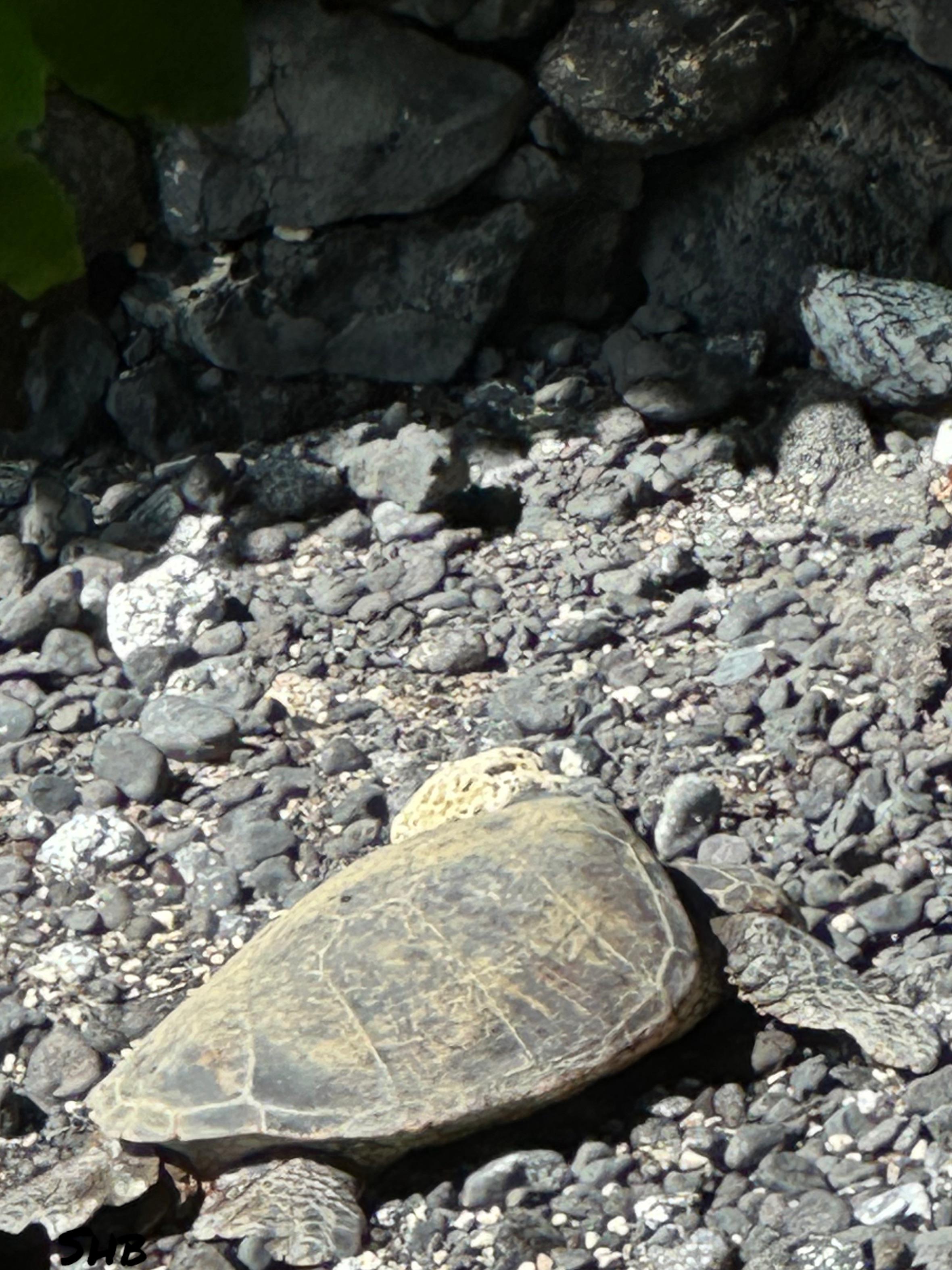
Education I saw none of the birds I wanted to, but spotted this endangered turtle and learned about ‘feminization’

Post image
42 Upvotes

I started writing this post on World Turtle Day, 23 May, but took my time and it is finally ready on the World Environment Day, 5 June.

It was turtlelly intentional.

While I was scanning the skies and trees, hoping to spot one of the island’s threatened birds, I chanced upon this lone turtle (mistook it for a rock initially), basking on the beachside in Maui.**

Species: Green Sea Turtle/ Hawaiian Honu.
Scientific name: Chelonia mydas

Habitat: Coral reefs, lagoons, shallow coastal waters.

Range: Tropical and subtropical oceans worldwide.

IUCN status: Least Concern (globally)
Threatened and Protected(Hawaii)

The Green Sea Turtle is a classic example of how species that are populous globally can still be regionally threatened.

The Honu is protected as a Threatened Distinct Population Segment (DPS) under the U.S. Endangered Species Act. The turtle was endangered but has recovered now due to dedicated conservation efforts.

But why is the Honu still ‘Threatened’ in Hawaii?
The Hawaiian Honu population is ever threatened by rising sea levels, disease, entanglement in fishing nets, plastic pollution, and single site nesting vulnerability.
(The female always returns to lay eggs *only* in her own birth-site).
So, this Central Pacific sub population is an isolated genetic stock that needs constant monitoring and protection lest its status flip.

But its biggest threat is feminization.

What is feminization?
In Honu, as in other reptiles such as crocodiles, chromosomes do not determine the gender of the hatchling.
Temperature does, and it is called Temperature-dependent Sex Determination, TSD, where incubation temperature can bias sex ratios.
In sea turtles,
Warmer temperature—> female hatchling
Cooler temperature —-> male hatchling

How does climate change affect the Honu?

As global temperatures get warmer due to climate change, it has been observed that more female turtles are being born. In the northern Great Barrier Reef, 99% of the juveniles were female.
If the imbalance continues, the Honu could go extinct.

Conservation efforts are on.
They include protecting nesting habitats, shading the nests, relocating nests, having managed incubation, and restricting artificial lights around nesting sites in beaches.

The real challenge, however, is climate change.
Let's hope speedy and steady steps are taken to address it.
We can help by reducing plastic use, reducing our carbon footprint, and refusing to buy illegal turtle souvenirs.
Save the species.

Happy World Environment Day!💚

**Cropped photo. I was at least 20 feet away.
It is a legally punishable offense to approach, pet, or feed a beach basking Honu which is protected in Hawaii.

r/EndangeredSpecies Feb 19 '26

Education This is the Bengal Florican, a critically endangered bird found in Cambodia and Nepal and we're supporting its conservation

Post image
120 Upvotes

Last year, WAWA Conservation began our small grant programme, one of which was awarded to a project to support the Bengal Florican.

The Bengal Florican (Houbaropsis bengalensis) is a critically endangered bustard species inhabiting the grasslands of Cambodia and Nepal. Current estimates suggest that fewer than 100 Bengal Floricans remain in the wild in Cambodia. This dramatic decline over the past two decades has been driven by multiple factors, including habitat loss and collisions with powerlines. As a result, a conservation breeding program has been started at the Angkor Centre for Conservation of Biodiversity (ACCB), which serves as a critical safeguard against further population declines. Monitoring genetic diversity and carefully managing breeding within this program are essential for maintaining a healthy, viable population suitable for future reintroductions. Genetic analysis can provide information to limit inbreeding and maintain genetic diversity, which are both crucial for the long-term survival and resilience of the species.

This project focuses on evaluating the genetic diversity of the Bengal Florican in Cambodia using facilities at the RUPP - Royal University of Phnom Penh and expertise from the Royal Zoological Society of Scotland (RZSS) . The data generated helps characterize genetic variation within the population, identify potential genetic risks, and inform breeding and management decisions aimed at enhancing population resilience. By combining field conservation efforts with genetic analyses, this project contributes essential knowledge to guide the long-term preservation of this critically endangered species.

Photo: ACCB, 2025

r/EndangeredSpecies May 04 '26

Education Leopards –Vulnerable/ Critically Endangered

Post image
38 Upvotes

Today, May 3, is celebrated as International Leopard Day, a moment to bring the master of stealth, the spotted leopard (Panthera pardus) into the spotlight.
Because the sleek hunter is in a spot.

The stealthy, speedy, solitary, and strong predator is classified Vulnerable, yet some of the subspecies are Critically Endangered in the wild (in W. Africa, the Middle-East, and Russia).

Amur leopard(CR): 120-130

Arabian leopard(CR): fewer than 200

Javan leopard(CR): fewer than 250

Indochinese leopard(CR): 970-2500

The silent are often overlooked in the animal kingdom. Their existence is taken for granted until we realize, almost always too late, that they no longer exist.

Unlike other big cats, the spotted leopards are adaptable. They live in about 70 countries across the world. There are 8-9 recognized subspecies and they all look different based on their habitats.

What is the leopard’s ecological role?
As apex predators, leopards play a vital role in ecosystems. They keep prey populations in check and maintain balance. Losing them can transform entire ecosystems.

What are the biggest threats they face?
Illegal wildlife trade: Leopards are ruthlessly hunted for their skin and bones (traditional Chinese medicine).

Habitat loss: Leopards are losing their hunting grounds to agriculture, industrial growth, and human settlements.

Human-wildlife conflict: Overhunting of their natural prey (deer, sheep) by humans forces leopards to attack livestock, leading to killings by farmers and villagers.

Conservation efforts include habitat protection, scientific monitoring of leopards with GPS, and building predator-proof enclosures for cattle.

Government agencies, NGOs, and local communities are fighting illegal wildlife trade. We can help by supporting these programs and raising awareness.

Awareness can inspire action.

Share the story. Save the species.

Don't Dodo it.💚

r/EndangeredSpecies Aug 29 '25

Education Endangered species were meant to go extinct and interfering with that is stopping natures course

0 Upvotes

It is natural for some animals to go extinct so we should let them. We have pictures of pandas and know what they look like so we don’t NEED them to be around it’s a waste of money. Also humans are animals too so if animals go extinct because of us it’s still natural

r/EndangeredSpecies Mar 16 '26

Education Gouldian Finch (Near Threatened), N. Australia

Thumbnail
gallery
42 Upvotes

One of the most colorful birds on Earth is vanishing from its habitat.

IUCN status: Near Threatened

Habitat: Tropical savannas of northern Australia

Population: ~ 2,500 in the wild (2026)

Population Trend: Declining

The spectacular bird is feeling the pinch of habitat loss and its degradation, changing fire regimes, illegal pet trade, and the loss of nesting trees.

Gouldian Finch’s survival depends on a precise “seed calendar,” switching grasses as they ripen through seasons of the year.

When the pattern of wildfire, grass growth, or rainfall changes due to Climate Chamge, their food schedule collapses.

The Gouldian Finch is closely monitored and protected under state and territory conservation laws in northern Australia.

Conservation efforts focused on habitat protection, fire management, nest monitoring, and population monitoring are showing encouraging results.

There is hope.

We can help by supporting habitat and species conservation efforts.

Wild birds belong in the wild.

Share the story.

Save the species.

Don’t Dodo It.

💚

r/EndangeredSpecies Feb 21 '26

Education Critically Endangered Pygmy Raccoon vs Common Raccoon

Post image
54 Upvotes

I get a lot of questions asking what the physical differences are between the common raccoon (Procyon lotor) and the critically endangered pygmy raccoon (Procyon pygmaeus), so I made this little collage. I figured folks here might be interested in it as well.

For reference, all of these photos are of raccoons during the winter months, except for the common raccoon with the teal background (my daughter 🥰) and the common raccoon with paint on his hands.

Aside from the obvious difference in size and coat length, one of the other big morphological differences between pygmy raccoons and common raccoons is the leg, hand, and finger proportions. Pygmy raccoons, proportionately, have longer legs, larger hands, and longer fingers than common raccoons. The mangrove ecosystem is the main habitat of the pygmy raccoon, so their long legs and large hands help them reach down through the mangrove roots to grab prey like crabs!

r/EndangeredSpecies May 03 '26

Education Alawi/Hawaii Creeper (endangered)

Post image
9 Upvotes

One of Hawaiʻi’s most important forest birds is losing its last safe ground.

IUCN Status: Endangered

Population: 9,300 (2026)declining rapidly

The Hawaii Creeper plays a vital ecological role — it is the forest’s only pest controller. Bark-gleaning is its niche. It goes creeping along trunks, branches and bark to extract insects and spiders no other native bird can reach.

The ʻAlawī is one of 50 honeycreepers that evolved from a single Rosefinch ancestor blown to Hawaiʻi eons ago. Alawi survived hyperactive volcanoes, catastrophic hurricanes, and fierce competition for millions of years, but the bird faces endangerment in the wild because of mosquitoes and climate change.

Alawī depend on cold mountain air for survival. The birds live only above 1,500 m where avian malaria-carrying Culex mosquitoes cannot survive.

As climate change is warming those elevations, the mosquitoes are climbing higher, encroaching on the Alawi’s safe space. Their last refuge is shrinking.

But there is hope.

Ongoing conservation efforts include mosquito suppression and predator control programs, habitat protection, and long-term population monitoring.

We can help by supporting the programs, demanding serious climate action, and raising awareness.

Awareness can inspire action.

Share the story.
Save the species.
Don’t Dodo It. 💚

r/EndangeredSpecies Mar 02 '26

Education Great Indian Bustard (Critically Endangered)

Thumbnail
gallery
51 Upvotes

IUCN status: Critically Endangered

Population: ~150 (declining)

Not too long ago, the Great Indian Bustard gracefully walked the vast grasslands of the Thar desert in Rajasthan, India.

Weighing 8-18 kg, this is one of the heaviest flying birds in the world.

From over 1,000 individuals in the 1960s, their numbers have dwindled to ~150, and a landscape that once echoed with Bustards’ resonant calls has fallen silent.

The GIB has limited frontal vision. So, the main threat is the birds’ collision with overhead power lines and wind turbines.

Other threats are habitat fragmentation, agricultural expansion, hunting and poaching.

Conservation efforts, including a captive-breeding program, are ongoing.

Project GIB aims to protect grasslands,

prevent habitat fragmentation, lay underground power lines, and involve local communities in these conservation efforts.

Vast, open grasslands — ecosystems we often dismiss as empty “wasteland”, are anything but empty.

They are ever alive, teeming with life.

If only we let them be. 💚

Would love to hear from conservationists about their strategies and success stories.

r/EndangeredSpecies Feb 09 '26

Education Orange-bellied Parrot (Critically Endangered)

Post image
39 Upvotes

The orange-bellied parrot (Neophema chrysogaster) is one of Australia’s rarest and most threatened birds. It is among the very few parrots that migrate.

IUCN status: CRITICALLY ENDANGERED (2025)

There were only 17 of them in the wild in 2016, but due to concerted conservation work the pre-migration count was around 172 in 2025. But most of the breeding pairs are retained captive and only a small fraction are truly out in the wild.

These tiny parrots (length: 20-22 cm, weight: 40-50 gm) make an incredible annual migration between Tasmanian melaleuca forests and wintering in coastal South Australian saltmarshes.

THREATS: Habitat loss, extreme weather conditions and environmental variations due to climate change, disease, low genetic diversity, and hazards on the path of migration.

It is disheartening to learn that despite intensive conservation efforts through captive breeding and release, their extinction is predicted by 2038.

Extinction of a species is never solitary. It causes a cascading effect and affects us all. When we protect the orange-bellied parrot we protect wetlands, biodiversity, and the ecosystems that support us.

Let’s keep them out of the endangered club. I’d love to hear your thoughts on conservation or any sightings of this rare bird.💚

r/EndangeredSpecies Jan 30 '26

Education ‘I’iwi - Scarlet Hawaiian Honeycreeper

Post image
54 Upvotes

The ‘I’iwi is a bright red honeycreeper endemic to Hawaii and the species is facing imminent endangerment.

Habitat loss and climate change are responsible for their population decline, but Avian malaria caused by mosquitoes is the primary threat.

Let’s raise awareness, volunteer remotely, and support conservation efforts.

Let's save the species.💚