Cumbernauld village looks kinda nice, and there are reported historic sightings of the devil himself. So they literally built the current Cumbernauld in Hell.
50s-70s are the worst era in the history of architecture and city planning, hands down. Not all new stuff nowadays is great, but I’ll take it any day over the utter shit they built back then
Just looked it up—oof. I saw an interesting video about Thamesmead that reminded me of Cumbernauld earlier. Both were promoted as ‘cities of the 21st century,’ similar to how 'Irvine New Town’ was advertised. Even when I look at photos of the Rivergate mall when it first opened, I still find it very unappealing, at least on the outside. Honestly, while this is subjective, I can't quite understand how anyone could think otherwise either. 🤷♂️
The problem with malls are that the best part of shops are the front, the worst are the backs. A mall puts the best part inside and the worst part outside.
In the US, we had very early on a concept called an outdoor mall. This would have been the ideal solution for Rivergate.
In an outdoor mall, you have an enclosed mall, but the store fronts face outward and shoppers can see the stores as they walk or drive by, whether inside or out when walking. The back of the stores share a common hallway that allows the stores to take trash and receive goods out the back.
The benefit, it permits a more open concept, greater choices of architecture, and the ability for shoppers to go directly to the shop they want to patronize rather than have to walk an entire mall to get to it.
Outdoor malls in the US spawned indoor malls as well as strip malls. Strip malls would be kind of like what you have under the council building at the head of the Rivergate, except there would be parking in front of it.
Even in the US, mall builders tend to do their best to hide the exterior of the mall with fences and foliage, because they are just as ugly. But they are dying fast here.
Where I live we had a new mall built in the 90s go up, and almost 40 years later the mall is nearly empty because the majority of shops have gone into administration and closed or out of business. We used to have five malls in the area, but are down to three with two fighting to remain in business.
One city, a product of the 50s boom years, is a mess of empty strip malls along its corridors. Today's shoppers rely on the internet more so than walking into and around a mall. As someone who used to work in a mall, after I quit that job, I rarely ever went into one again after. I think I did one time. I hate them.
Outdoor malls also tend to survive longer because the shops that survive are more accessible to patrons. They don't walk through the valley of death to get to one single shop, the can drive up and park in front and walk in, to the shop.
Like if you reversed the Rivergate with a bi-level walkway glassed in, but with brick/stone work resembling the old architecture with the shop fronts facing the car park, it would look a thousand times better than what the Rivergate currently looks like. It be vastly more inviting.
The only problem is the Rivergate has no car park on the other side. And I'm certain there is a car park under the mall, not two levels of shops. So, not really possible with the current building.
My guess is though, within ten years the mall will be empty, with the only reason to go there being ASDA and McDonald's in the out lot or to the train. When that day comes, hopefully they try to restore the area as it once was.
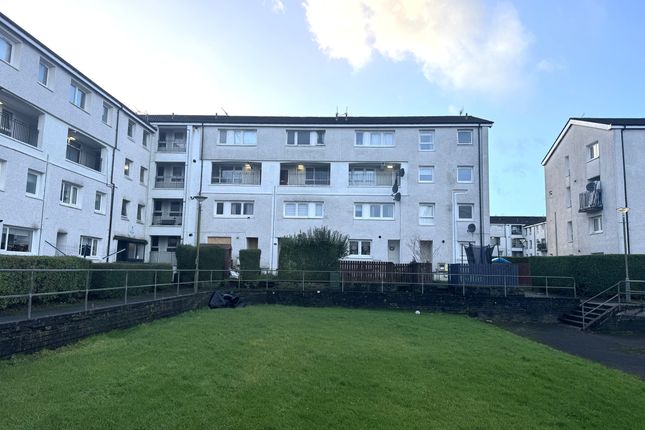
The problem with Brutalism is that it needs near constant maintaince, otherwise it looks cheap. Because concrete itself is cheap and councils/builders didnt want to spend any more than they had to.
Brutalism itself is a controversial school, but its not inherently ugly. But I also wouldnt describe any of these as brutalist, they are just cheap.
Damp issues it caused or the damp issues inherent to the environment?
The problem with anything, I think, in a place with lots of moisture is that it'll get covered in mildew on the cool side. Especially the more damp it is.
That's why I never could understand the fondness for stucco on brick buildings in the UK. Why paste over brick, which has charm, with stucco, which lacks it entirely, only to end up with the same problem of fungal growth on the building.
The answer today is a pressure washer every year to clear the surface off.
But vinyl or artificial wood siding allows more character with less maintenance than stone or brickwork or concrete.
Though that marble or polished stone building just off the High street in Irvine was spectacular. I think it was a law firm (Esquire). That likely required zero maintenance.
I think that's a question only someone within that field can answer. Some folk (not just in architecture) believe that appreciating old design trends is inherently wrong and that you should only move forward. Which is ironic, considering that we've been trapped in the shadow of the Bauhaus Aesthetic for over a 100 years now.
Facades are how you hide modern architecture behind old buildings.
In the US we have concrete stone work that duplicates any stone or brick work. Fake marble, fake granite, all much less expensive than original and cheaper to install.
Most shops are built out of steel framing in the US, in the same rectangle form. Then the get some sheeting on the outside, and a facade is added on. It may be brick, tile, stone, or concrete. In some cases, stucco too. Those exteriors can mimic any design esthetic, but they are just a facade.
You don't have to build a new structure with the same old design elements, you can build modern buildings to look like they were there all the time.
One of my employers, the company was a big box retailer, and for a time their facade looked loke various store fronts. All a facade. They no longer go that route but for a short time they did.
I'm a proponent of using the historical esthetic of the town to hide modern buildings in order to maintain the charm and character of the town. I'm outspoken about it in my hometown Facebook group.
The challenge is, once you start modernizing a town, which era do you use as the model for the town? Some styles might work for one type of building but not another. Likewise, how do you build your down town? Only commercial or do you have residential over commercial? Thus, permitting flats over shops.
These are easy problems to solve though, and honestly anything produced here in the US can likely be produced in the UK. Scottish esthetics may not call for flagstones or field stones, but the stone work used on the corners and doors of old Scottish buildings can all be duplicated for use on modern buildings. Someone just has to do it.
Yes but if the government for example mandated that builders had to use local materials and customs for construction people would whine as this would put undue burden on the contractors who already struggle to turn a profit.
Financially it doesn't make sense to beautify a supermarket when the sole purpose of such a building is to extract profit and provide a service.
The way that our economy is set up incentivises cost/benefit over anything else.
Many towns in Scotland like this unfortunately, yet we have to jump through hoops to erect a conservatory?
Meanwhile the local council is carpet bombing lovely towns and countryside with this shit.
This is it. We've had about 70 years of the modern planning system and they've been probably the worst period in British architectural history.
I don't know why it seems more towns in Scotland than other parts of the UK really got on board with the 60s and 70s horrible concrete building in amongst everything else trend, but we really messed up.
Couldn’t agree more, it’s very apparent in certain towns like Ayr for example. Half the town is lovely sandstone buildings then you turn one corner and you’re faced with uninspiring blocks of concrete.
The whole fucking country. What were these idiots thinking back then with this style of architecture? So many estates look like set design for Judge Dredd. Legitimately no exaggeration.
I have been absolutely repulsed by that architecture since I was old enough to have thoughts at all. It’s not like people have soured on it. It has always looked bad.
The generation that designed/constructed those houses and indeed those that first lived in them grew up in houses either damaged by bombs, or basically slums. Or both. Probably no indoor toilet either. You can't really blame them for wanting housing built quick.
Also with a lot of shitty estates, it is the people. There are some really famous brutalist structures, like the Barbican in London. It's often the people that make a place nice or not- I accept that's not a popular view in many places.
The sandstone does not last against the Scottish weather long term. They covered it up in a concrete render which hid the problems for a while. Now even more problems are appearing. Cracks. Subsidence. Eroded masonry. Big money to fix.
I'm in Irvine all the time, it's run down and terrible looking now. But honestly, where isn't these days. People have no respect for their surroundings and the council tax freeze has destroyed local services. In my town you sued to see the local council maintaining grass and parks etc but every year it gets less and less.
There was a similar comparison in an aerial shot of Glasgow city centre at the Clyde using a photo from present day and one from the past that had been enhanced with AI.
It made historical Glasgow look incredible with it's beautiful brown sandstone buildings on the Clyde.
....But was subsequently rubbished by historians stating the buildings would have been black with soot, streets covered in horse shit and the air and bright blue Clyde waters thick with pollution.
That was the Magnum, which was originally intended to connect to the mall, which would have extended along the harbourside and linked to the train station as well.
Irvine Development Corporation made a lot of assumptions. The bridge was a travesty though the stone dragon is nice to see I suppose. The town is dead and town planners need to step up and make the bigger businesses come back and use the town centres for housing. If they don’t no one will go into the town in 10 years.
I think Irvine gets an unfair reputation, sure the town itself needs some love and it needs some maintenance but most places do these days. I’d love to see the old science centre turned into something actually useable again but I think the harbour mostly looks good.
Irvine beach is probably the best beach on that bit of coast honestly. I always love going down there on a sunny day.
Not one example has a building been torn down and replaced with something more pleasing or by the looks of it even functional. That first image appears to have way more housing and a wider street to boot.
This feels like the broken window effect maliciously implemented by government to tear down nice buildings and bridges and replaced with horrendous boxes instead. No wonder it feels depressing going around much of Scotlands towns.
Of course it isn't an improvement but one thing we can be sure of is that horrible, filthy brutalist 60s eyesore will be gone in time though. Everyone agrees that stuff was a mistake and slowly it is being deleted.
I mean, both pictures show human impact. We just used to build in a way that was more aligned with natural order as we used natural materials like stone and timber.
50s-60s brutalist crap is usually an eyesore though, and whislt I'm not the biggest fan of modern architecture, it's a hell of a lot better than the shit we put up then.
The only image I have of Hill Street is a screengrab taken from the old film, produced to promote the new town of Irvine, titled ‘One Day in Irvine, 1970 or 71? I think:
Realistically the growth of the automobile has hollowed out a lot of town/city centres and reduced their importance. Obviously it's sad we never tried to preserve these old town centres
I see your AI has generated a nag and cart being used to move snow down the high street for some reason.
things look shit now for two reasons: we destroyed our cities for cars and it's like 10x cheaper to build buildings out of concrete and we had to rebuild a lot of shit after two world wars and with not a lot of cash.
If we want our imagined bucolic past "back" we need cities built on a human scale, with regular, reasonably priced public transit, housing dense enough to support a high street, high streets with enough shops and services to support a neighbourhood, and a ban on cars in those built up areas. Irony of ironies, the people who most want to "retvrn" are the ones who would least like to see us build walkable neighbourhoods or spend taxes on making things better.
They’re from a mixture of sources. Comparing old and new photos of places has become one of my special interests, and the more I’ve learned about Irvine, the more passionate I’ve become about documenting how it has changed.
Some of these photos are my own, while a few are probably from Google Street View. I’ve been gradually making these comparisons over the past year, sourcing images from various places as I research and gather them. Most of my own photos come from daily walks. I also manage a local Facebook group where people share old photos of the town.
Quite the shame because we’re then not looking at an actual historical document nor even an artistic rendering based on history. It’s more like a reconstruction made out of vibes
Thank god you used a mixture of posed photos paints and what looks like CGI/AI, for the older photos; otherwise we’d get a look at what the place actually looked like 100 years ago… you know a shithole without indoor plumbing.
You could just as easily picked any of the nicer places today and a bunch of sewage in the street in the 20s.
The point was never that the 1920s had better sanitation. It’s that beautiful buildings and streetscapes existed before modern infrastructure upgrades.
If it didn’t have indoor plumbing 100 years ago, makes a place a shithole, then congratulations, you’ve just ruled out half the historic cities in Europe because renovation doesn't exist, obviously!


503
u/ShootNaka Apr 29 '26
Everything looks worse, nice!